A good model railway exhibition visit gives you more than a bag of purchases. It can help you solve a modelling problem, discover a different scale, meet a club or simply enjoy watching trains run through beautifully observed scenery. A little preparation leaves more time for all of those things.
Use this guide to plan your first exhibition or get more from a familiar show. Start with our model railway events directory, then check the organiser’s own information for the arrangements that matter to your visit.
Your exhibition day at a glance
- Before you go: confirm the date, venue entrance, opening times, tickets and travel arrangements.
- Choose three priorities: a layout to watch, someone to speak to and a demonstration or trader to visit.
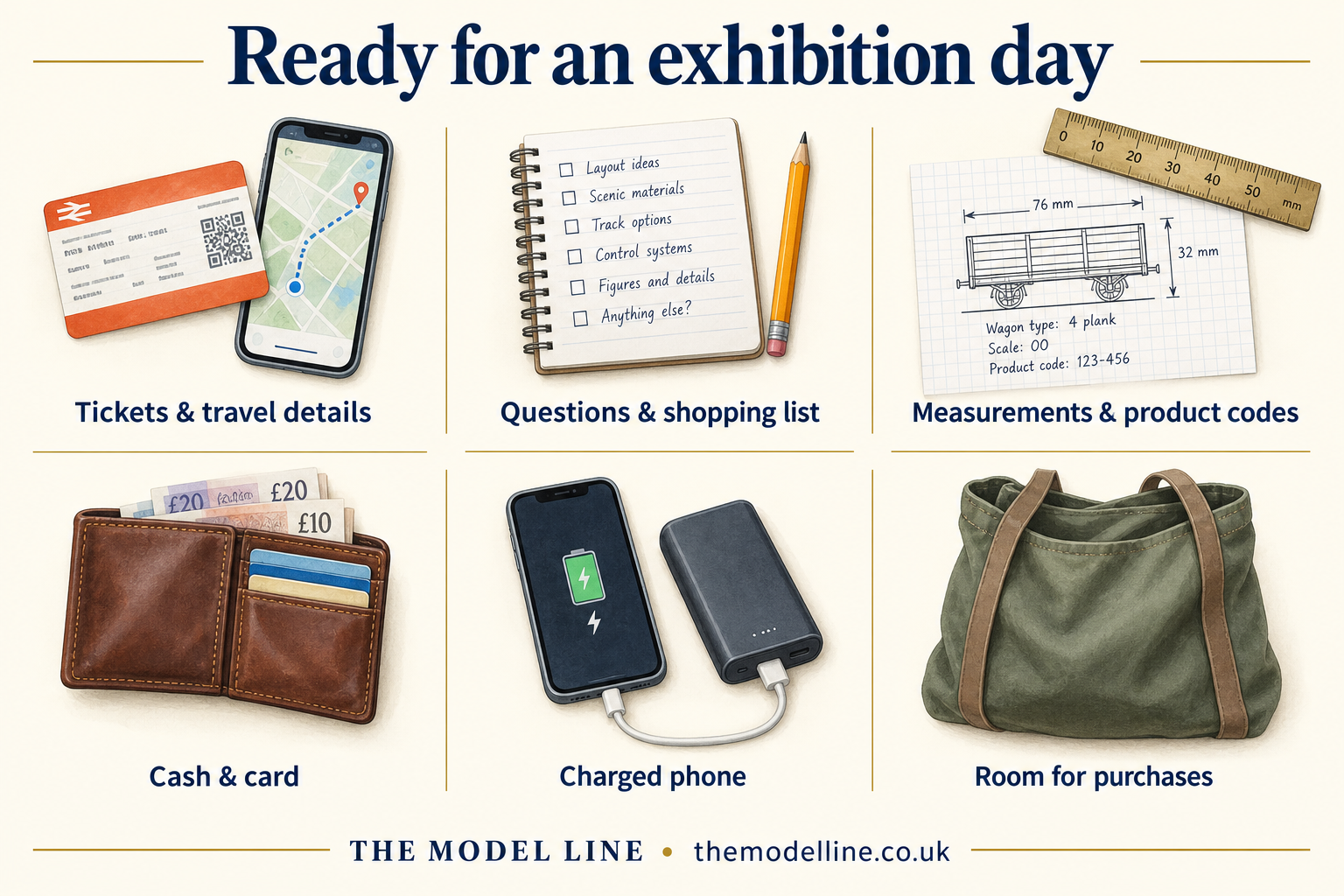
- Pack lightly: tickets, a short shopping list, useful measurements and a way to record ideas.
- At the show: find your bearings, make time for breaks and return to favourite layouts.
- Before leaving: collect outstanding purchases, note useful contacts and check your journey home.
Choose the right model railway exhibition
Read the layout and trader lists rather than judging a show only by its size. A smaller exhibition may offer exactly the specialist advice you need; a larger event may give you more variety across scales, periods and countries. Check whether the programme includes practical demonstrations, society stands, talks or activities for younger visitors.
If you are new to the hobby, look for a mix of layouts and opportunities to ask questions. Experienced modellers might plan around a particular layout, a specialist supplier or a technique they want to learn. Give yourself permission to explore something outside your usual interests: a narrow-gauge scene or compact shunting layout can suggest ideas for a very different project.
Check tickets, travel and the venue before setting off
Confirm details for the correct year and day. Saturday and Sunday opening hours can differ, and last admission may be earlier than closing time. Check whether advance booking is available, whether a ticket covers one day or the whole weekend, and whether leaving and returning is allowed.
- Driving: use the visitor entrance and parking instructions, not just the venue’s main postcode. Allow time for parking, a shuttle or a walk to the hall.
- Public transport: check the final connection to the venue, weekend service changes and the return timetable. An exhibition shuttle may have its own fare and operating hours.
- Admission: check child age bands, family tickets, companion arrangements and which payment methods are accepted.
- Facilities: look up toilets, seating, catering and any rules about bringing food or bags.
Save your ticket and key travel details on your phone before leaving. Keep a paper copy if you prefer. For a longer day out, use our directory map to explore nearby places, but check a shop’s opening hours directly before adding it to your itinerary.
Make a short list of things you want to see
If a floor plan or show guide is available, mark a handful of priorities. Include a must-see layout, a useful trader and a demonstrator or society stand. Note the times of any scheduled talks first, then build the rest of the day around them.
Leave gaps. Layouts deserve more than a quick photograph, and a useful conversation can easily change your plans. If a stand is busy, note its location and come back. Ask when a demonstrator expects to repeat a technique rather than assuming you have missed your only opportunity.
A flexible plan for a full day
The following is a suggested sequence, not an event timetable. Adjust it to the show’s opening hours, your energy and any timed sessions.
- First half-hour: get your bearings. Find the main halls, toilets, seating and your priority stands. Check for programme changes.
- First main session: enjoy the layouts. Watch several train movements at your favourites. Notice how the layout operates as well as how it looks.
- Before lunch: visit a demonstration or specialist. Take your questions and measurements while you still have time to return later.
- Lunch: stop properly. Find a seat, review your notes and decide what you still want to see. Eat earlier or later if that suits you and catering is available.
- Afternoon: explore and revisit. Try a different scale, speak to a club and return to layouts that were crowded earlier.
- Final half-hour: finish comfortably. Collect anything reserved by agreement, make a final note of useful contacts and leave enough time for your transport.
If you need one particular component or a pre-arranged collection, visit that trader early. Otherwise, spreading shopping through the day can help you compare options and avoid carrying everything from the start.
What to take to a model railway exhibition
Comfortable footwear and a light bag make a long day easier. Bring a charged phone, tickets, any essential personal items and a notebook if you prefer paper. A small power bank can be useful when tickets, travel information and photographs all depend on your phone.
For shopping, take a list with product codes, quantities, your scale and gauge, and relevant measurements. Photographs of an existing model, connector or space on your layout are often more helpful than a description from memory. Ask a supplier before bringing a model for assessment, repair or fitting; these services may need booking and may not be offered at the stand.
Set a spending limit that includes admission, travel, parking and food as well as purchases. Check payment arrangements and consider carrying some cash alongside a card. Leave room in your bag to protect delicate purchases.
Get more from layouts and demonstrations
Watch for a while before moving on. Look at how trains arrive and depart, how operators use sidings, and how scenery conceals the edges of the modelled world. A small detail such as a weathered wall, a convincing tree line or a well-placed building might be the idea you take home.
When an operator or demonstrator has a suitable pause, try a specific question:
- How did you make that surface or scenic effect?
- What helped this track or coupling arrangement work reliably?
- How much space does the complete layout need, including the hidden tracks?
- What would you do differently if you built it again?
- Which part of this technique would you recommend a beginner tries first?
Give operators room to concentrate when movements need their attention. Ask before touching anything, and only use controls when invited. Follow the organiser’s photography policy, avoid blocking other visitors and ask before taking close photographs of people or filming a demonstration.
Buy models and materials with a clear purpose
Check that a purchase suits your railway, not just your wish list. Confirm the scale, gauge, dimensions and operating requirements. For electrical items, have the details of your control system ready and ask the supplier about compatibility rather than guessing.
For a second-hand model, ask about condition, missing parts, modifications, whether it has been tested and whether a demonstration is possible. Check what is included in the box. Ask the seller about their returns arrangements and retain a receipt and contact details. A useful purchase might be a small pack of materials that lets you practise something you have just seen.
Visiting with children or planning for access needs
For children, plan a manageable visit with breaks rather than aiming to see every stand. Look for advertised hands-on activities and agree a meeting point with older children. A simple challenge—spot a signal box, a goods train and a tiny animal—can turn viewing layouts into a shared activity.
If access arrangements affect your day, ask the organiser about the specific things you need: step-free routes, lifts between halls, accessible toilets, seating, parking distance, companion tickets or space for a wheelchair or pushchair. Also ask whether there are quieter visiting periods or a quiet space; neither should be assumed. Layout viewing heights vary, so check what assistance or viewing arrangements are available.
Bring the useful ideas home
Photograph a layout’s name board, where permitted, so you can match your pictures to the right exhibitor later. Add a brief note explaining what interested you. Record product names and supplier details before they disappear into a pocketful of leaflets.
Choose one achievable next step when you get home: try a scenic technique on a spare piece of board, follow up a supplier’s advice or contact a club. Our club directory and model shop directory can help you continue those conversations.
Common questions about exhibition visits
How long should I allow?
Plan around what you want to do. A few hours may suit a compact show; a larger exhibition with talks, demonstrations and shopping can fill a day. Include breaks and travel time, and avoid making the final train or bus your only workable way home.
Is Saturday or Sunday better?
Compare opening hours, timed activities and travel options. Do not assume Sunday is quieter or that every trader will have the same stock throughout the weekend. If a particular activity or product matters, ask the organiser or trader before choosing.
Can I leave for lunch and come back?
Check the event’s re-entry policy before leaving. Some organisers use a ticket, stamp or wristband; arrangements differ between shows.
Do I need to be an experienced modeller?
No. You can enjoy watching layouts without owning a railway. Introduce yourself as a newcomer when asking for advice, and explain what interests you or how much space you have.
Find your next railway day out
Browse this weekend’s model railway events or look further ahead in the events calendar. Pick a show that interests you, check the organiser’s latest information and leave room for the unexpected conversation or layout that makes the day memorable.
Is something inaccurate or out of date? Send the editorial team a correction.